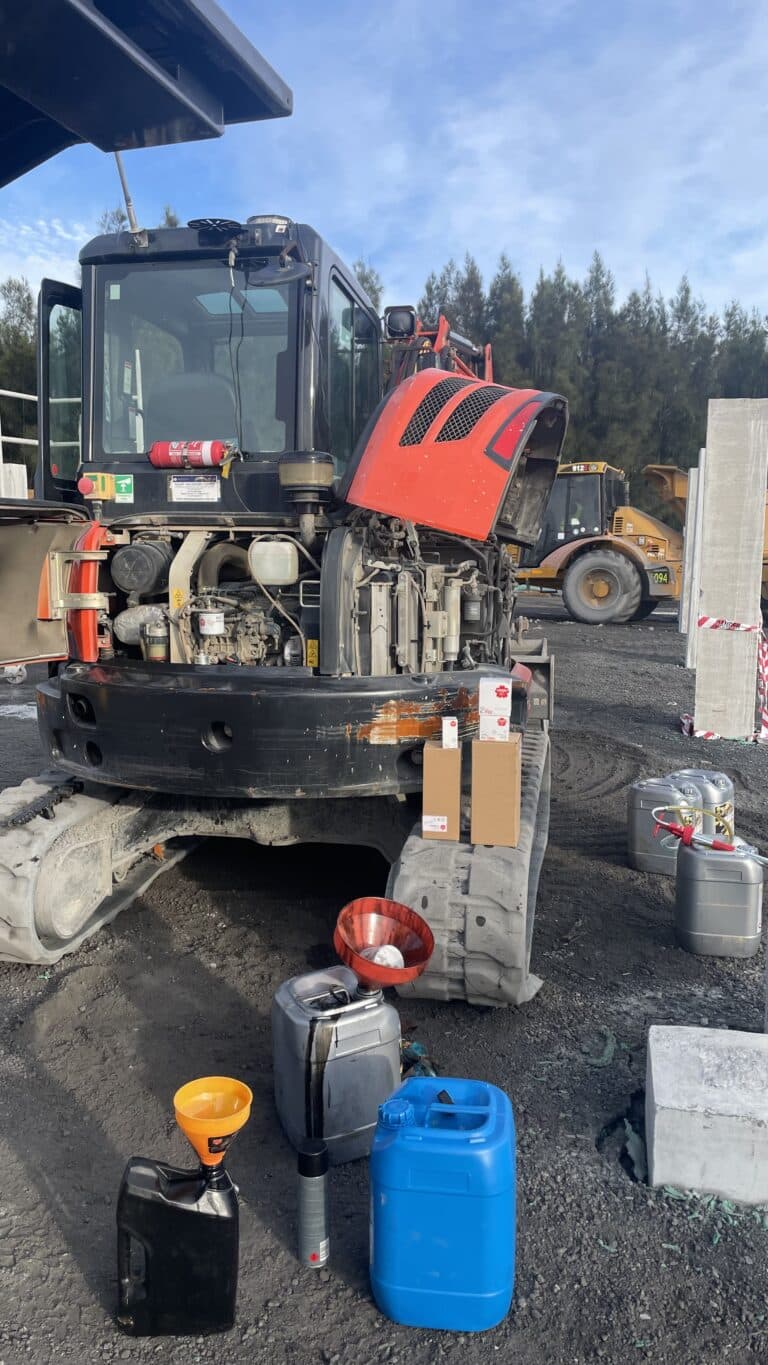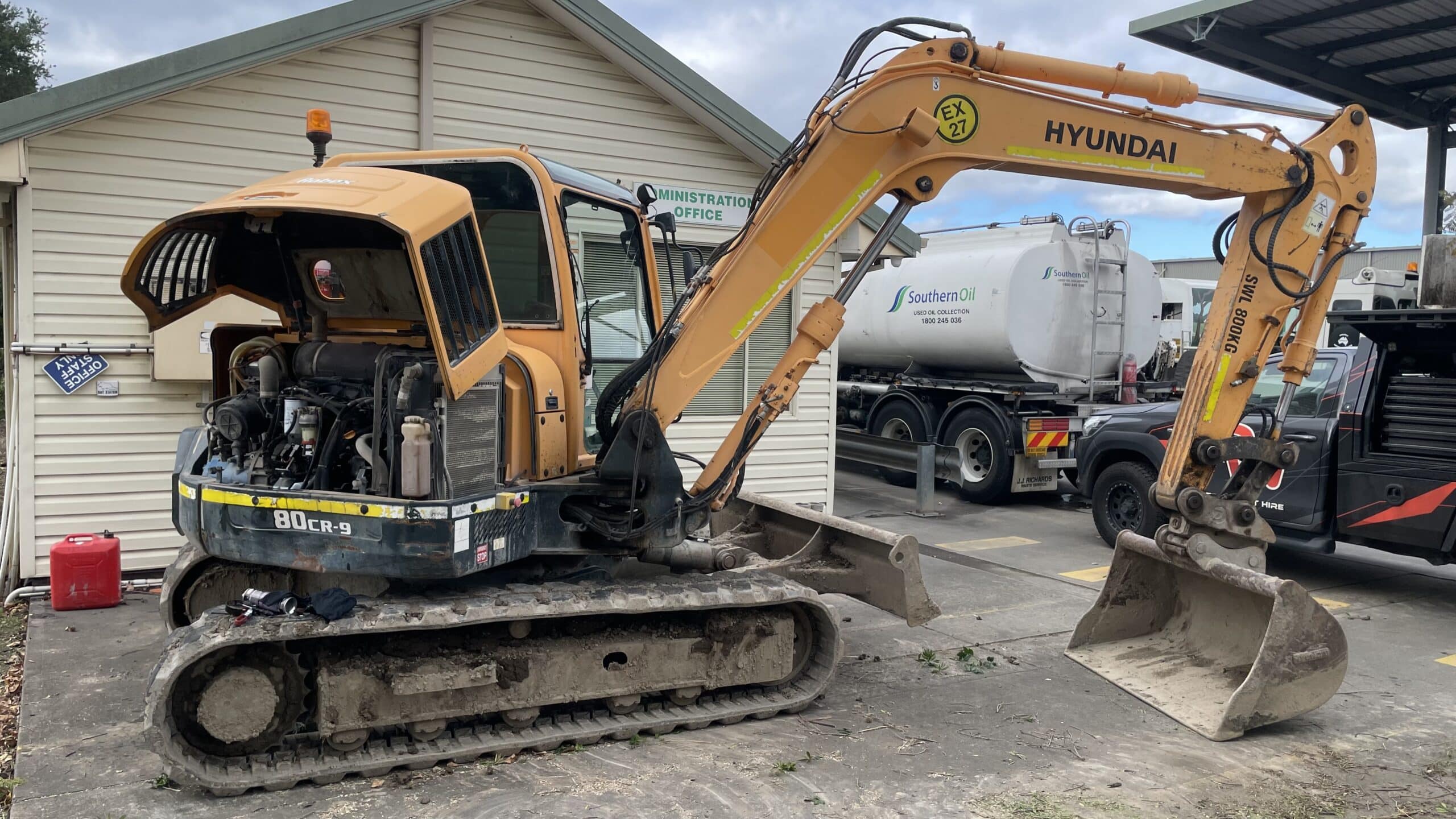
Hydraulic failures on an excavator almost never arrive without warning. In nearly every emergency callout we attend, the operator can point to something that had been off for a week or two beforehand: a slightly slower boom, a faint whine under load, a small weep at a fitting that kept getting wiped away.
The problem is that those symptoms are easy to work through. The machine still digs, the job still gets done, and the cost of stopping feels higher than the cost of pushing on. Then a hose lets go on a Friday afternoon and the real bill arrives, which is not just the repair but the lost days either side of it.
1. The machine is slower under load, not at idle
Cycle times that look fine with an empty bucket but drag noticeably under load are the earliest usable signal. It points at internal leakage in the pump, or a main relief valve bleeding off pressure before it should. Nothing looks wrong from the cab, which is exactly why it gets missed.
2. Oil that has changed colour or smell
Healthy hydraulic oil is clear and amber. Cloudy or milky oil means water ingress. Dark oil with a burnt smell means it has been running hot long enough to break down the additive package. Either way the oil has stopped protecting the components it is moving through.
By the time a hydraulic failure stops the machine, it has usually been telling you about itself for a fortnight.
3. Foaming or aeration in the reservoir
Foam in the tank means air is getting in somewhere on the suction side: a loose fitting, a perished seal, or simply a low oil level. Aerated oil compresses, which makes the controls feel spongy and lets pressure spike in ways the system was never designed for.
4. Heat you can feel through the guard
A hydraulic system that runs hot is doing work it should not have to. Blocked coolers, a restricted return line or a partially failed pump all show up as heat before they show up as breakage. If the guard is uncomfortable to touch after normal operation, something upstream is wrong.
5. Weeps that keep coming back
A fitting that seeps, gets wiped, and seeps again is not a nuisance. It is a fitting that has lost its seal. Cylinder rod seals in particular fail progressively, and a rod that has been running with a compromised seal will have been drawing contamination straight into the barrel.
What to do next
- Log the symptom, the date, and the load condition it appears under.
- Take an oil sample before topping up, not after.
- Book a diagnostic while the machine is still working. It is a fraction of the cost of a breakdown callout.
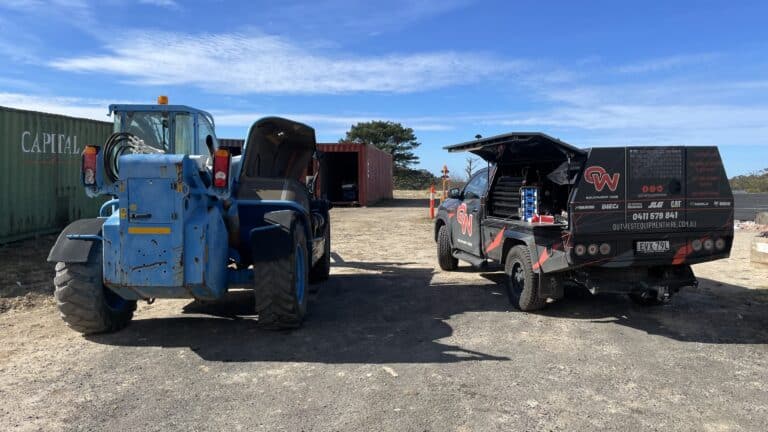
Our hydraulic specialists run pressure and flow diagnostics on site across the Blue Mountains and Western Sydney. If any of the above sounds like a machine in your fleet, it is worth a look before it becomes a recovery.